
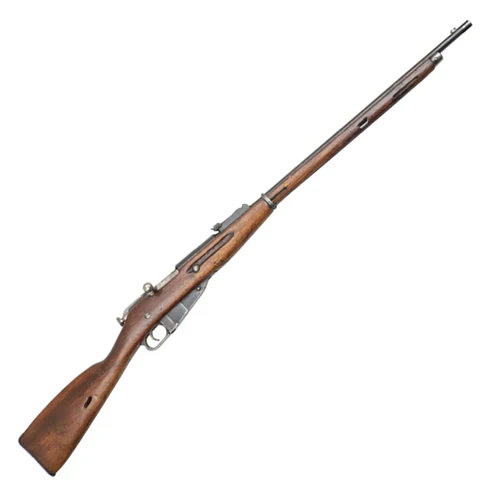
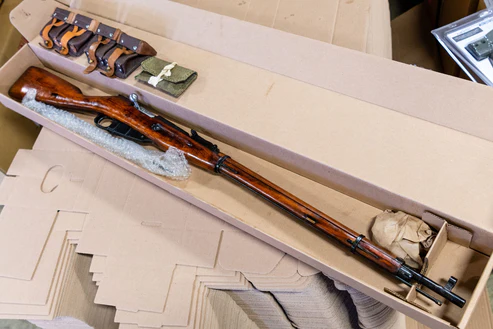
Soviet Mosin Nagant 91/30 Military Surplus Rifle 7.62X54R Canada
Original price was: C$900.99.C$650.99Current price is: C$650.99.
Key Specifications
| Specification | Details |
|---|---|
| Model | Mosin Nagant 91/30 |
| Country of Origin | Soviet Union |
| Action | Bolt-Action |
| Caliber | 7.62×54R |
| Magazine Capacity | 5 Rounds |
| Barrel Length | Approximately 730 mm (28.7 in) |
| Overall Length | Approximately 1,232 mm (48.5 in) |
| Service Period | 1930–1940s and beyond |
| Feed System | Internal Magazine |
Soviet Mosin Nagant 91/30 Military Surplus Rifle 7.62x54R: History, Features, and Collector Information
The Soviet Mosin Nagant 91/30 Military Surplus Rifle chambered in 7.62×54R is one of the most recognizable military bolt-action rifles in history. Developed from the original Mosin-Nagant design adopted by the Russian Empire in 1891, the 91/30 variant became the standard infantry rifle of the Soviet Union during the first half of the 20th century.
Known for its rugged construction, battlefield reliability, and historical significance, the Mosin Nagant 91/30 remains an important artifact for military historians, collectors, and enthusiasts interested in World War II firearms.
What Is the Mosin Nagant 91/30?
The Mosin Nagant 91/30 is a bolt-action military rifle that served as the primary service rifle of the Soviet armed forces from 1930 through much of World War II. It was an updated version of the earlier M1891 rifle and featured improvements in manufacturing, sights, and overall usability.
Historical Background
The Mosin Nagant design originated in the late 19th century when the Russian military sought a modern repeating rifle. Following extensive trials, a design incorporating elements from both Russian and Belgian engineers was adopted as the M1891.
In 1930, the Soviet Union introduced the 91/30 modernization, which became one of the most widely produced military rifles in history. Millions were manufactured at major Soviet arsenals, including:
- Tula Arsenal
- Izhevsk Mechanical Plant
During World War II, the rifle equipped Soviet infantry forces on the Eastern Front and played a significant role in numerous major battles.
The 7.62×54R Cartridge
The Mosin Nagant 91/30 fires the 7.62×54R cartridge, one of the oldest military cartridges still in use today.
Characteristics
- Introduced in 1891
- Rimmed cartridge design
- Long military service history
- Used in rifles and machine guns
- Known for effective long-range performance
The cartridge remained in military service across multiple nations for decades and continues to be studied as an important part of military ammunition history.
Design and Features
Bolt-Action Mechanism
The rifle uses a manually operated bolt-action system. Shooters cycle the bolt between shots to chamber the next round from the internal magazine.
Durable Construction
The 91/30 was designed to function in harsh battlefield environments, including:
- Extreme cold
- Mud
- Snow
- Dust
Its simple design contributed to its reputation for reliability.
Adjustable Iron Sights
The rifle features iron sights designed for military use, allowing soldiers to engage targets at varying distances.
Wooden Stock
Most military surplus examples feature a hardwood stock that reflects traditional military rifle construction of the era.
Mosin Nagant 91/30 in World War II
The rifle became a symbol of Soviet resistance during World War II. Millions were issued to infantry soldiers, while specialized sniper variants were developed for designated marksmen.
Several famous Soviet snipers used modified Mosin Nagant rifles during the conflict, contributing to the rifle’s lasting historical reputation.
Manufacturing and Arsenal Marks
Collectors often identify rifles based on arsenal markings and production years.
Common markings include:
- Tula Star
- Izhevsk Arrow-in-Triangle
- Soviet proof marks
- Refurbishment stamps
These markings help historians trace production origins and military refurbishment history.
Military Surplus Legacy
Following World War II, large quantities of Mosin Nagant rifles remained in storage. Many were preserved in military arsenals for decades, making them valuable historical artifacts today.
Military surplus examples often display:
- Original arsenal markings
- Wartime production features
- Historical refurbishment indicators
- Matching or non-matching serialized components
Why the Mosin Nagant 91/30 Remains Historically Important
The Mosin Nagant 91/30 represents a significant chapter in military history due to:
- Extensive wartime service
- Massive production numbers
- Association with major historical events
- Long service life across multiple countries
Its role in 20th-century military history has made it one of the most studied military rifles ever produced.
Frequently Asked Questions
What caliber is the Mosin Nagant 91/30?
The rifle is chambered in 7.62×54R, a military cartridge introduced in 1891.
When was the Mosin Nagant 91/30 produced?
Production began in 1930 and continued through World War II, with millions manufactured.
Was the Mosin Nagant used in World War II?
Yes. The Mosin Nagant 91/30 was the primary infantry rifle of the Soviet Union during World War II.
What makes the Mosin Nagant historically significant?
Its extensive military service, large production numbers, and role in major historical conflicts contribute to its historical importance.
Conclusion
The Soviet Mosin Nagant 91/30 Military Surplus Rifle (7.62×54R) remains one of the most influential military rifles of the 20th century. From its origins in Imperial Russia to its widespread use during World War II, the rifle’s historical impact continues to attract the attention of military historians, researchers, and collectors interested in the development of military firearms and battlefield technology.
Related products
FIREARMS
FIREARMS
FIREARMS
FIREARMS